

October 15, 2026
The case for upstream NLRP3 inhibition – safety
Javed Butler discusses the safety benefits of upstream NLRP3 inhibition:
NOTE: Javed Butler is a consultant for Rezera.
The central safety challenge in cardiovascular anti-inflammatory therapy is to reduce pathological inflammation without unduly impairing the immune functions required for host defence and tissue repair.
CANTOS and ZEUS provide an important caution. In both studies, downstream cytokine blockade was associated with an excess of serious infection, underscoring that IL-1β and IL-6 are not merely markers or by-products of disease. Both contribute to normal immune responses as well as broader physiological processes. A cytokine may therefore be pathogenic in one setting while remaining important to host defense and tissue homeostasis in another.
This distinction is especially relevant in atherosclerosis. Inflammatory activity within plaque is driven in part by endogenous danger-associated molecular patterns, or DAMPs, signals generated by cellular stress and tissue injury, including cholesterol crystals, oxidized lipids and cellular debris. These sterile danger signals activate NLRP3 in plaque, leading to maturation of IL-1β and IL-18 (Figure 1). The therapeutic objective is therefore not to silence inflammation globally, but to attenuate persistent, DAMP-driven inflammasome activity within diseased tissue.
FIGURE 1
Ruvonoflast modulates multiple inflammatory mediators but leaves parallel infection response pathways intact
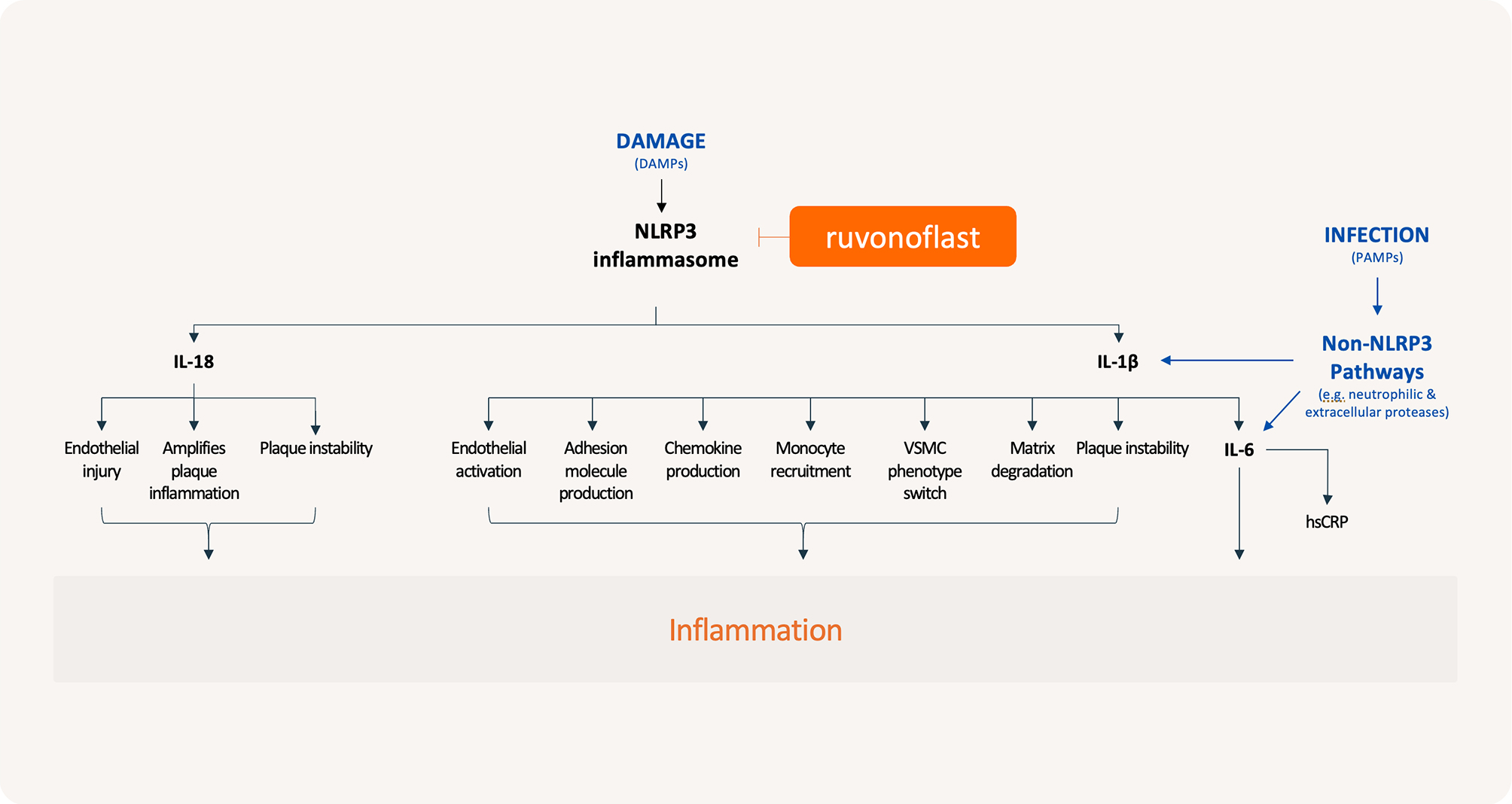
Infection presents a different immunological problem. Pathogen-associated molecular patterns, or PAMPs, are microbial signals detected by a broad network of innate immune sensors. These pathways activate antimicrobial responses independently of NLRP3, while other inflammasome sensors also contribute to host defence against pathogens.
This is the rationale for investigating NLRP3 inhibition. NLRP3 sits upstream of IL-1β and IL-18 and can influence downstream IL-6 and hsCRP signalling. An intracellular NLRP3 inhibitor, like ruvonoflast, is designed to attenuate pathological cytokine maturation at its source – within inflammatory cells responding to local danger signals – rather than broadly neutralizing a cytokine after it has entered the circulation. This disease-contextual approach is designed to modulate a plaque-relevant inflammatory pathway while leaving the wider network of pathogen sensing and immune defence intact (Figure 2).
FIGURE 2
Upstream NLRP3 inhibition preserves host defense compromised by downstream cytokine blockade
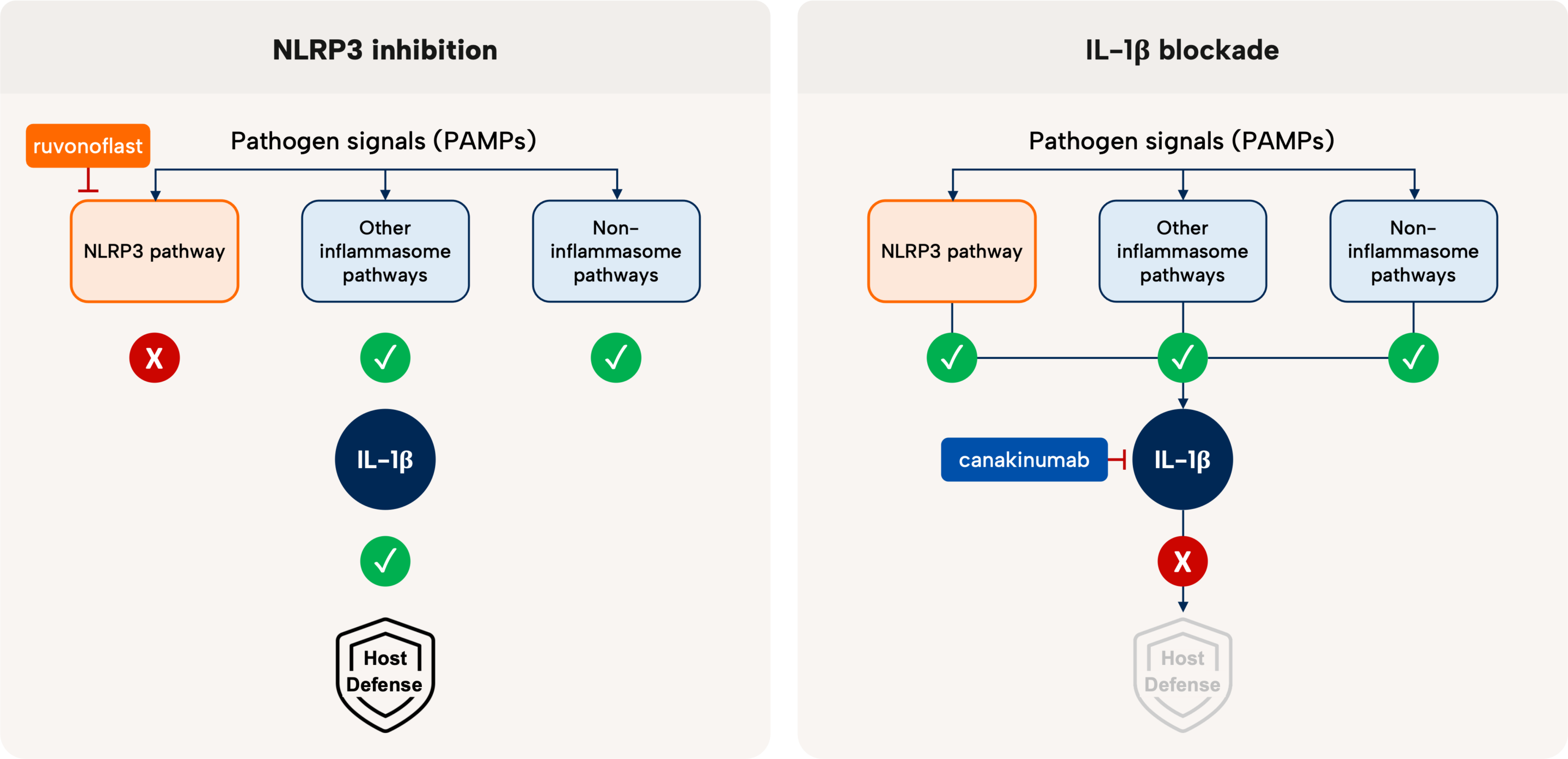
An oral NLRP3 inhibitor offers an additional practical advantage as compared to injectable biologics: the degree and duration of pathway inhibition can be adjusted, interrupted or rapidly reversed if infection occurs. Taken together, selectivity for a DAMP-driven inflammatory node, the presence of parallel antimicrobial pathways and rapid reversibility establish a clear mechanistic rationale for a differentiated infection-risk profile of ruvonoflast compared with long-acting cytokine antibodies.
References:
Ray KK, et al. Anti-Inflammatory Effects of Oral NLRP3 Inhibition With Ruvonoflast Among Individuals at Elevated Cardiovascular Risk. J Am Coll Cardiol. 2026:S0735-1097(26)06570-8. https://doi.org/10.1016/j.jacc.2026.05.014.
Ridker PM, et al. Antiinflammatory Therapy with Canakinumab for Atherosclerotic Disease. N Engl J Med. 2017;377(12):1119-1131. https://doi.org/10.1056/nejmoa1707914.
Novo Nordisk. Novo Nordisk provides update on the ZEUS phase 3 trial in people with ASCVD, CKD and inflammation. July 31, 2026. Available here.